
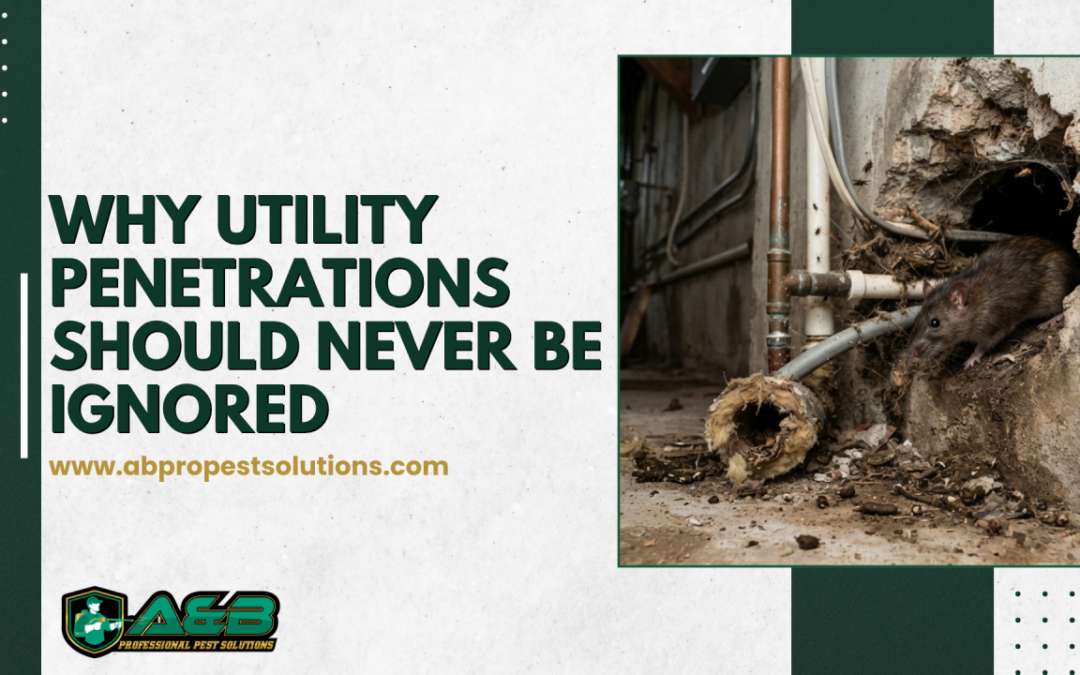
The Small Openings That Create Big Pest Problems
When people think about pest entry points, they often focus on doors, windows, roof gaps, or damaged walls. However, one of the most overlooked vulnerabilities in any property is utility penetrations—the openings created where electrical conduits, plumbing pipes, communication cables, gas lines, and HVAC systems pass through walls, floors, ceilings, and foundations.
These penetrations are essential for a building’s functionality, but when left unsealed or poorly maintained, they become direct highways for pests. Even the smallest gap surrounding a pipe or conduit can provide enough space for rodents, cockroaches, ants, termites, and other pests to enter unnoticed.
Ignoring these seemingly insignificant openings can eventually lead to widespread infestations, structural damage, contamination risks, and increased maintenance costs.
What Are Utility Penetrations?
Utility penetrations are intentional openings made during construction or renovations to allow building services to pass through structural components. These include:
- Water supply and drainage pipes
- Electrical conduits
- Internet and communication cables
- Air-conditioning refrigerant lines
- Fire sprinkler piping
- Gas lines
- Ventilation ducts
- Fiber optic installations
While these penetrations are necessary, they should always be properly sealed after installation. Unfortunately, many remain partially open due to poor workmanship, aging sealants, renovations, or additional utility upgrades.
Why Pests Love Utility Penetrations
Pests naturally seek protected routes that offer safety, warmth, moisture, and food access.
Utility penetrations provide exactly that.
1. Easy Entry Without Being Seen
Unlike doors or windows that receive regular attention, pipe penetrations are usually hidden behind cabinets, inside utility rooms, above ceilings, or beneath floors.
This allows pests to move through buildings unnoticed for extended periods.
Rodents often travel along utility lines because they naturally follow walls and enclosed pathways.
Cockroaches hide inside pipe chases where moisture and darkness are abundant.
Termites exploit foundation penetrations to access wooden structural members while remaining concealed.
2. Hidden Highways Inside Buildings
Once pests enter through one penetration, they rarely stay in one location.
Wall voids connected by electrical conduits and plumbing lines create an interconnected network that allows pests to spread rapidly throughout a property.
This is why infestations often appear in multiple rooms even when only one entry point exists.
3. Moisture Makes the Problem Worse
Many utility penetrations involve plumbing systems or air-conditioning lines where condensation or small leaks frequently occur.
Moist environments attract numerous pests including:
- Termites
- Cockroaches
- Ants
- Silverfish
- Mosquitoes (if standing water develops)
When moisture combines with an unsealed penetration, it creates one of the most attractive pest harborage sites in any building.
The Risks of Ignoring Utility Penetrations
1. Rodent Infestations
A mouse can squeeze through an opening approximately the size of a pencil, while rats require only a slightly larger gap.
Once inside, rodents can:
- Contaminate food and stored products
- Damage electrical wiring
- Spread bacteria
- Cause unpleasant odors
- Increase fire risks by chewing insulation
2. Cockroach Activity
Cockroaches frequently enter through gaps around plumbing beneath sinks, utility rooms, and drainage systems.
Once established, they multiply quickly and contaminate:
- Food preparation areas
- Storage facilities
- Medical environments
- Restaurants
- Offices
3. Termite Entry
Subterranean termites often use hidden structural penetrations to move from the soil into buildings.
Because their activity remains concealed behind walls and beneath floors, extensive damage may occur before visible signs appear.
4. Ant Colonies
Small cracks around conduits provide ideal access routes for ants searching for food and water.
What begins as occasional sightings can quickly develop into persistent indoor infestations if entry points remain accessible.
Buildings Most at Risk
Although every structure contains utility penetrations, some properties face higher risks due to their complexity and continuous operations.
High-risk facilities include:
- Manufacturing plants
- Warehouses
- Commercial kitchens
- Restaurants
- Food processing facilities
- Hospitals
- Hotels
- Office buildings
- Schools
- Residential developments
Large facilities often have hundreds—or even thousands—of utility penetrations, making routine inspections essential.
Prevention Starts with Professional Inspection
Many utility penetrations are impossible to evaluate without a thorough building inspection.
A professional pest management assessment identifies:
- Unsealed wall penetrations
- Damaged sealants
- Rodent entry points
- Moisture-prone utility areas
- Structural vulnerabilities
- Hidden pest activity around service lines
By addressing these issues early, property owners can significantly reduce infestation risks before pests establish themselves.
The Value of Preventive Pest Management
Effective pest prevention goes beyond treating visible infestations.
It focuses on identifying and eliminating the conditions that allow pests to enter in the first place.
Routine inspections, exclusion work, structural assessments, moisture management, and ongoing monitoring all play critical roles in protecting a property.
Small openings may appear harmless, but they often become the weakest link in an otherwise well-maintained building.
Final Thoughts
Utility penetrations may be out of sight, but they should never be out of mind. Every unsealed opening around pipes, cables, conduits, or service lines is a potential entry point that pests can exploit. By recognizing these hidden vulnerabilities and addressing them proactively, property owners can prevent infestations before they start, protect valuable assets, and maintain a healthier, safer environment.
At A&B Professional Pest Solutions, we don’t just treat pests—we identify the structural conditions that allow infestations to occur. Through comprehensive inspections, expert risk assessments, and integrated pest management strategies, we help businesses and homeowners close the gaps that pests depend on.
To know more about A&B’s services, please visit the A&B’s website (www.abpestsolutions.com.ph) or Facebook Page (https://www.facebook.com/ABPestSolutions/) to know more about their services. A&B also disinfects workplaces or houses to kill COVID-19 Virus.
You may also contact: +63 905 496 4550 and +63 951 062 4830
A&B Professional Pest Solutions Corporation is located at the Ground Floor of Monterey Building at Genesis St., Centro de San Lorenzo, Santa Rosa, 4026 Laguna, Philippines