Pests rarely appear without a reason.
Whether it’s termites silently damaging structural wood, rodents contaminating storage areas, cockroaches spreading bacteria, or mosquitoes breeding in hidden water sources, infestations almost always begin in areas where conditions favor pest survival.
Unfortunately, many property owners focus only on visible pest activity and overlook the environmental and structural conditions that attract pests in the first place. By the time pests become visible, colonies and populations may already be well established.
This is why identifying high-risk zones within your property is one of the most important components of an effective pest management strategy.
Understanding where pests are likely to enter, hide, feed, and reproduce allows property owners to take preventive action before infestations result in costly damage, health concerns, operational disruptions, or regulatory issues.
Why High-Risk Zones Matter
Every property contains areas that are naturally more attractive to pests than others.
These locations typically provide one or more of the following:
• Reliable food sources
• Access to water and moisture
• Shelter and protection from disturbance
• Favorable temperatures for breeding
• Easy access into structures
• Hidden travel pathways
When these conditions exist together, pests can establish themselves quickly and often remain undetected for long periods.
For businesses, this can lead to inventory contamination, failed audits, customer complaints, damaged reputations, and financial losses.
For homeowners, infestations can result in structural deterioration, costly repairs, food contamination, and health risks to family members.
High-Risk Zone #1: Moisture-Damaged and Damp Areas
Moisture is one of the strongest attractants for many pest species.
Termites require moisture to survive and often establish activity near damp wood. Cockroaches thrive in humid environments, while mosquitoes require standing water to reproduce.
Common moisture-related risk areas include:
- Leaking water pipes
- Damaged roofing systems
- Water-damaged ceilings
- Plumbing penetrations
- Bathroom wall cavities
- Under sinks and counters
- Air-conditioning condensate lines
- Poorly drained landscaping
- Water storage facilities
Even minor leaks can create conditions suitable for pest activity.
Property owners should conduct routine inspections for signs of moisture accumulation, mold growth, water stains, and wood deterioration.
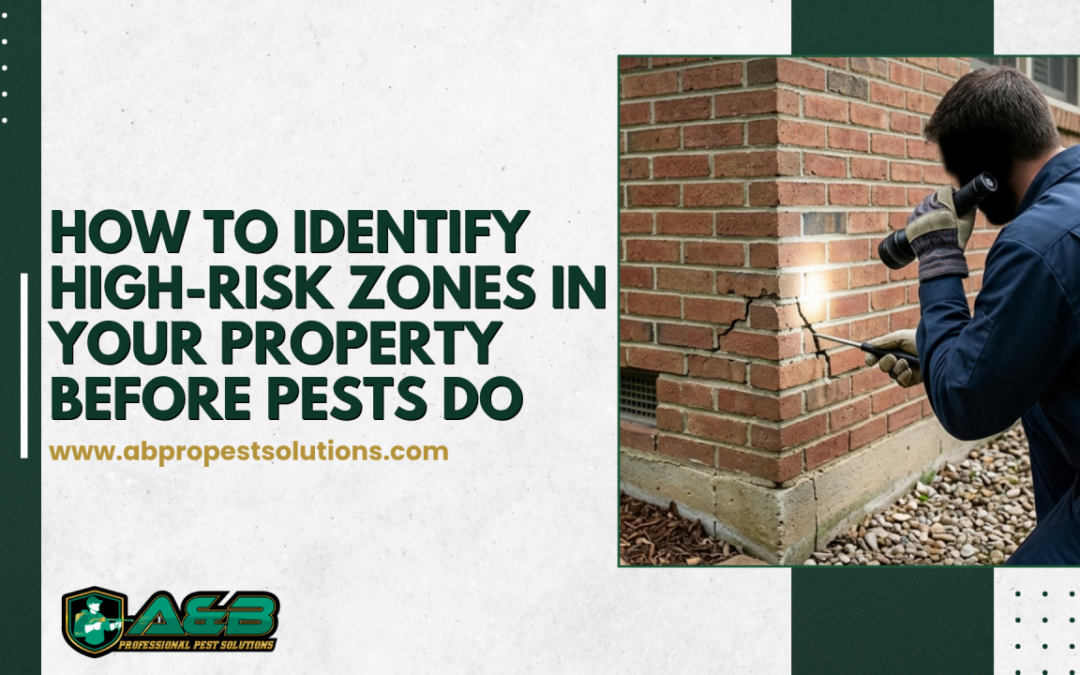
High-Risk Zone #2: Structural Cracks, Gaps, and Entry Points
Pests are constantly searching for ways to enter buildings.
Rodents can squeeze through openings much smaller than many people realize, while insects and termites can exploit tiny cracks and hidden structural voids.
Common entry points include:
- Foundation cracks
- Expansion joints
- Utility penetrations
- Electrical conduit openings
- Roof gaps
- Damaged vents
- Door thresholds
- Window frames
- Loading dock openings
A single unsealed gap can provide continuous access for pests.
Routine sealing, exclusion work, and structural maintenance are critical preventive measures.
High-Risk Zone #3: Kitchens, Food Preparation Areas, and Food Storage Zones
Food availability directly influences pest populations.
Even properties with excellent sanitation can develop pest issues if food handling practices are inconsistent.
Areas requiring special attention include:
- Commercial kitchens
- Restaurant preparation areas
- Pantry storage rooms
- Employee break rooms
- Cafeterias
- Food manufacturing facilities
- Grocery stockrooms
Common attractants include:
- Food debris under equipment
- Grease accumulation
- Improperly sealed food containers
- Spilled ingredients
- Unclean drains
Cockroaches, rodents, ants, flies, and stored-product pests are frequently associated with food handling environments.
High-Risk Zone #4: Drainage Systems and Sewer Connections
Drainage systems are often overlooked during inspections despite being major pest harborage sites.
Drains provide moisture, organic matter, shelter, and travel routes.
Common pest concerns include:
- Cockroach infestations
- Rodent movement through sewer networks
- Fly breeding in organic buildup
- Mosquito breeding in stagnant water
Inspection priorities should include:
- Floor drains
- Grease traps
- Storm drains
- Sewer access points
- Open drainage channels
Regular cleaning and maintenance help eliminate favorable breeding conditions.
High-Risk Zone #5: Storage Areas and Cluttered Spaces
Pests prefer locations where they can remain undisturbed.
Storage areas often provide darkness, shelter, nesting materials, and limited human activity.
Particularly vulnerable locations include:
- Warehouses
- Stockrooms
- Archive rooms
- Utility closets
- Maintenance storage areas
- Unused spaces
Cardboard boxes are especially attractive because they provide shelter and can retain moisture.
Maintaining proper inventory rotation, housekeeping, and organization significantly reduces pest harborage opportunities.
High-Risk Zone #6: Exterior Landscaping and Property Perimeters
Many infestations begin outside the structure.
Poor exterior maintenance can create ideal conditions for pests before they eventually move indoors.
Risk factors include:
- Overgrown vegetation
- Dense shrubs against walls
- Tree branches touching roofs
- Wood debris accumulation
- Firewood storage near structures
- Standing water
- Poor drainage
Exterior inspections should be conducted regularly, particularly during rainy seasons when pest activity increases.
High-Risk Zone #7: Utility Rooms and Mechanical Areas
Mechanical rooms often contain heat, moisture, electrical penetrations, and limited foot traffic.
These factors create favorable conditions for numerous pests.
Areas to inspect include:
- Electrical rooms
- Generator rooms
- Pump rooms
- Boiler rooms
- HVAC systems
- Utility tunnels
Because these locations are often overlooked, infestations can remain hidden for extended periods.
High-Risk Zone #8: Waste Management Areas
Improper waste handling is one of the fastest ways to attract pests.
Garbage areas provide food, moisture, and shelter for a wide range of pest species.
Potential problems include:
- Overflowing garbage bins
- Uncovered waste containers
- Food residue accumulation
- Leaking dumpsters
- Poor cleaning practices
Waste management areas should be inspected frequently and cleaned on a scheduled basis.
High-Risk Zone #9: Hidden Termite Activity Zones
Termites are among the most destructive pests because their activity often occurs behind walls, beneath floors, and underground.
By the time visible signs appear, extensive damage may already exist.
Common termite hotspots include:
- Door jambs
- Window frames
- Baseboards
- Wooden columns
- Expansion joints
- Flooring systems
- Wall cavities
- Utility penetrations
- Wood-to-soil contact areas
Signs of concern include:
- Hollow-sounding wood
- Mud tubes
- Bubbling paint
- Warped wood surfaces
- Discarded termite wings
- Unexplained wood damage
Advanced termite inspection technologies such as iTraker help detect hidden termite activity, moisture accumulation, and structural vulnerabilities without causing unnecessary damage to the property.
High-Risk Zone #10: Construction and Renovation Areas
Many people assume construction eliminates pest problems.
In reality, excavation, trenching, demolition, and soil disturbance can disrupt existing termite colonies and rodent habitats, causing pests to relocate into nearby structures.
Construction-related risk factors include:
- Soil disturbance
- Exposed foundations
- Temporary openings
- Building material storage
- Debris accumulation
Properties undergoing construction or renovation should be monitored closely for pest activity.
The Role of Professional Pest Inspections
While routine self-inspections are valuable, many high-risk zones are hidden from view.
Professional inspections provide:
- Detailed property assessments
- Identification of hidden vulnerabilities
- Termite risk evaluations
- Moisture detection analysis
- Rodent activity monitoring
- Customized prevention recommendations
Regular inspections help detect problems before they escalate into expensive infestations.
Prevention Is Always Less Expensive Than Infestation
One of the biggest misconceptions in pest management is that treatment begins when pests become visible.
Effective pest control begins much earlier.
It starts by identifying the conditions that attract pests and eliminating them before colonies become established.
Through routine inspections, moisture management, sanitation improvements, exclusion practices, vegetation control, and professional monitoring, property owners can significantly reduce pest risks while protecting their structures, operations, inventory, and occupants.
At A&B Professional Pest Solutions Corp., we specialize in identifying hidden pest risks through comprehensive inspections, advanced termite detection technologies, Integrated Pest Management (IPM) programs, and long-term prevention strategies designed to keep residential, commercial, and industrial properties protected year-round.
To know more about A&B’s services, please visit the A&B’s website (www.abpestsolutions.com.ph) or Facebook Page (https://www.facebook.com/ABPestSolutions/) to know more about their services. A&B also disinfects workplaces or houses to kill COVID-19 Virus.
You may also contact: +63 905 496 4550 and +63 951 062 4830
A&B Professional Pest Solutions Corporation is located at the Ground Floor of Monterey Building at Genesis St., Centro de San Lorenzo, Santa Rosa, 4026 Laguna, Philippines