
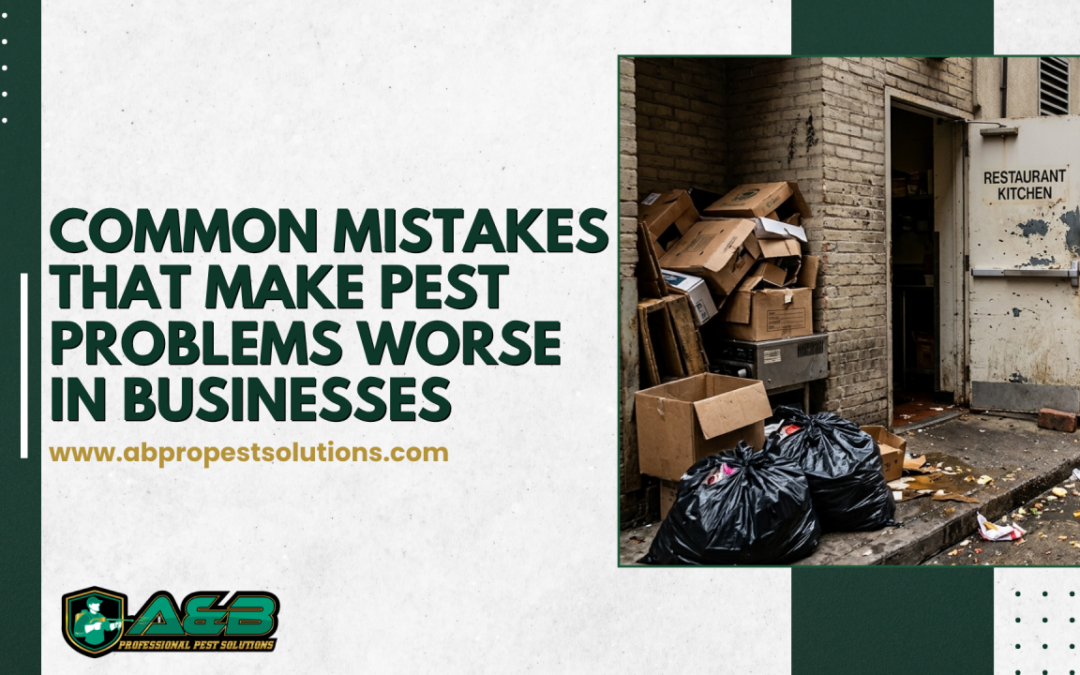
Small Mistakes Can Lead to Major Infestations
Many businesses believe that pest problems only occur when a building is visibly dirty or poorly maintained. In reality, even well-managed commercial properties can develop serious infestations when minor warning signs are overlooked or ineffective control methods are used.
Whether you operate a restaurant, warehouse, office, supermarket, manufacturing plant, healthcare facility, school, or retail establishment, your daily decisions directly influence whether pests thrive or disappear.
Here are some of the most common mistakes businesses make—and why they often allow pest problems to become larger, more expensive, and more difficult to eliminate.
1. Waiting Until Pests Become Visible
One of the biggest misconceptions is believing that seeing one or two pests isn’t a serious concern.
In reality, visible pests often represent only a small portion of the total population. By the time cockroaches are seen during business hours or termites become noticeable, the infestation may already be well established.
For example:
- Cockroaches hide inside walls, cabinets, drains, and equipment.
- Rodents often remain hidden above ceilings or inside wall voids.
- Termites can silently damage wooden structures for months or even years before visible evidence appears.
Early intervention is always more effective—and significantly less costly—than responding after an infestation has expanded.
2. Relying Only on DIY Pest Control Products
Many businesses purchase aerosol sprays, glue traps, or over-the-counter insecticides hoping for a quick solution.
While these products may kill individual pests, they rarely eliminate:
- Hidden nesting sites
- Breeding populations
- Pest entry points
- Large colonies
- Underlying environmental conditions attracting pests
Surface treatments often provide temporary relief while allowing infestations to continue growing behind walls, ceilings, storage areas, and equipment.
Professional Integrated Pest Management (IPM) addresses the root cause instead of simply treating visible symptoms.
3. Ignoring Small Signs of Pest Activity
Businesses often overlook early warning signs because they appear insignificant.
These include:
- Small droppings
- Grease marks along walls
- Shed insect skins
- Egg cases
- Gnaw marks
- Unusual odors
- Damaged packaging
- Mud tubes
- Tiny piles of wood dust
- Dead insects appearing regularly
Each of these indicators can signal an active infestation requiring immediate attention.
Routine inspections help identify these warning signs before pest populations explode.
4. Poor Waste Management
Overflowing garbage bins, food residue, grease buildup, and improperly stored waste create ideal feeding grounds for pests.
Common attractants include:
- Food scraps
- Sugary spills
- Standing liquids
- Organic waste
- Cardboard storage
- Recycling areas
Even if indoor areas remain clean, neglected exterior dumpsters and waste collection zones can continually attract rodents, flies, cockroaches, and ants.
Consistent waste management is one of the most effective preventive measures.
5. Ignoring Structural Maintenance
Tiny structural defects often become pest highways.
Common access points include:
- Cracks in walls
- Broken door seals
- Gaps around utility pipes
- Damaged vents
- Roof openings
- Unscreened drains
- Broken windows
Rodents can squeeze through surprisingly small openings, while insects require even less space.
Combining pest control with routine facility maintenance significantly reduces future infestations.
6. Skipping Regular Pest Monitoring
Many businesses only schedule pest control after receiving complaints or spotting pests.
Unfortunately, reactive treatment usually means the infestation has already grown.
Routine monitoring allows professionals to:
- Detect activity early
- Identify seasonal trends
- Monitor high-risk areas
- Replace monitoring devices
- Evaluate treatment effectiveness
- Prevent recurring infestations
Preventive maintenance is far more effective than emergency extermination.
7. Improper Storage Practices
Storage areas often become ideal pest habitats.
Common mistakes include:
- Storing products directly on the floor
- Overstocking inventory
- Leaving cardboard undisturbed for long periods
- Blocking inspection areas
- Allowing moisture accumulation
Proper shelving, rotation of stock, and maintaining clear inspection pathways make it much harder for pests to establish hidden nesting areas.
8. Overlooking Moisture Problems
Many pests depend on moisture to survive.
Leaks, condensation, clogged drains, poor ventilation, and standing water attract:
- Cockroaches
- Termites
- Mosquitoes
- Flies
- Ants
- Silverfish
Repairing water leaks often eliminates one of the primary conditions pests need to thrive.
9. Not Training Employees
Employees are often the first to notice unusual pest activity.
Without proper awareness, important warning signs may go unreported.
Staff should understand how to recognize:
- Pest droppings
- Egg cases
- Unusual odors
- Damage to products
- Rodent gnaw marks
- Flying insect activity
- Structural changes associated with termites
A well-informed workforce strengthens your overall pest prevention program.
10. Choosing Reactive Instead of Preventive Pest Management
The most successful businesses understand that pest management is an ongoing process—not a one-time treatment.
Preventive programs provide:
- Routine inspections
- Monitoring devices
- Risk assessments
- Targeted treatments
- Documentation
- Compliance support
- Long-term protection
Instead of constantly responding to pest emergencies, businesses maintain continuous protection that safeguards operations, customers, employees, inventory, and brand reputation.
Prevention Always Costs Less Than Recovery
Pest infestations rarely happen overnight. They develop gradually through small issues that go unnoticed or untreated.
By avoiding these common mistakes and partnering with experienced pest management professionals, businesses can significantly reduce infestation risks, maintain regulatory compliance, protect valuable assets, and create a safer environment for employees and customers.
At A&B Professional Pest Solutions, we believe effective pest management starts with prevention, continuous monitoring, and science-based solutions—not temporary fixes. Our customized commercial pest management programs help businesses detect problems early, eliminate active infestations efficiently, and keep pests from returning.
To know more about A&B’s services, please visit the A&B’s website (www.abpestsolutions.com.ph) or Facebook Page (https://www.facebook.com/ABPestSolutions/) to know more about their services. A&B also disinfects workplaces or houses to kill COVID-19 Virus.
You may also contact: +63 905 496 4550 and +63 951 062 4830
A&B Professional Pest Solutions Corporation is located at the Ground Floor of Monterey Building at Genesis St., Centro de San Lorenzo, Santa Rosa, 4026 Laguna, Philippines