
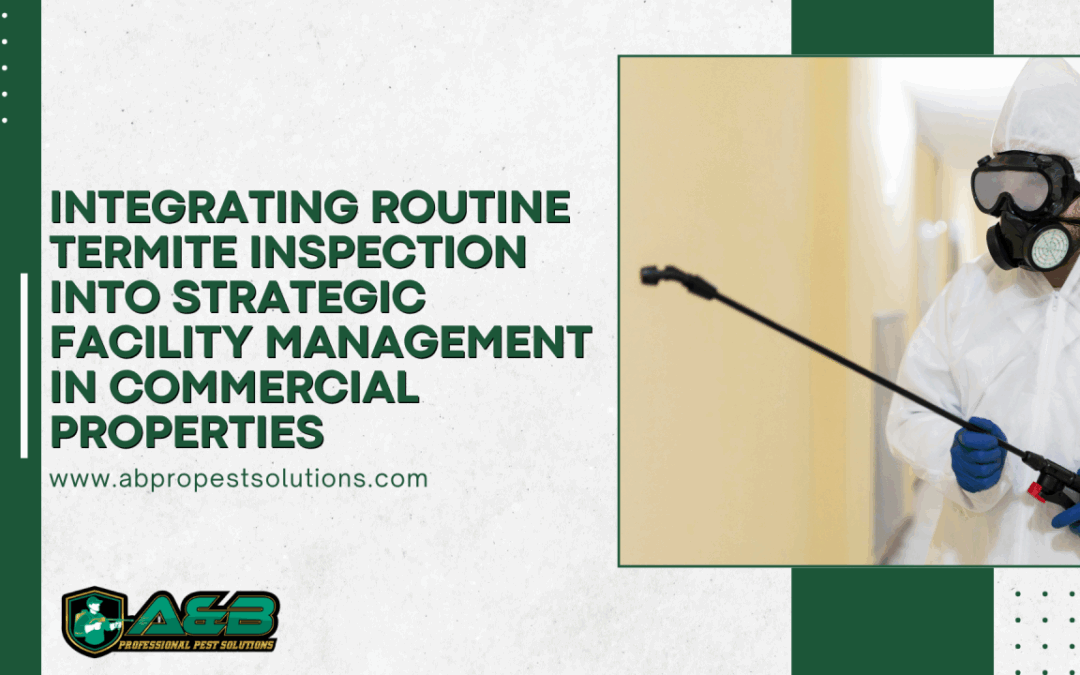
Termite infestation is one of the most underestimated yet highly destructive risks facing commercial property owners in the Philippines today. These “silent destroyers” operate undetected within walls, subflooring, and wood structures—often resulting in costly damages before any visual signs appear. This article presents the case for integrating routine termite inspections into the broader preventive maintenance and risk management programs of commercial facilities. It outlines inspection frequency guidelines, risk factors unique to Philippine commercial environments, the benefits of advanced non-invasive detection technologies like iTraker, and the financial impact of ignoring termite risk. The objective is to promote data-driven decision-making and long-term asset protection through proactive pest management.
I. The Unseen Risk of Termite Activity in Commercial Properties
Unlike visible pests that leave signs of their presence, termites infiltrate silently—feeding on wooden structures, insulation, drywall, and even electrical conduits. In commercial buildings where structural integrity impacts employee safety, operational uptime, and brand reputation, termite management is not merely a sanitation concern—it is a critical component of operational resilience.
The Philippines’ environmental conditions—high humidity, tropical rainfall, and persistent warmth—make it especially vulnerable to termite proliferation. Subterranean termites, in particular, are the most damaging species in the region, and they can enter even well-maintained properties via underground networks, wall cracks, and plumbing junctions.
II. Risk Profile of Commercial Properties in the Philippines
Due to local climate conditions and varied commercial infrastructure, the following property types face elevated termite risks:
- Food Facilities and Distribution Centers: Prone to moisture retention, cardboard packaging, and organic waste.
- Offices, Hotels, and Malls: Often built decades ago with outdated protection or complex utility structures.
- Warehouses and Factories: High volumes of wooden pallets, exposed soil-wall junctions, and fluctuating humidity levels.
- Retail Establishments: With dense display systems, ceiling voids, and wood paneling often overlooked during inspections.
Compounded by the country’s susceptibility to water intrusion and moisture-driven termite activity, proactive pest management should be a facility standard—not an option.
III. Inspection Frequency: Best Practices and Risk-Based Scheduling
Quarterly Inspections (Every 3 Months):
Recommended as the baseline for most commercial buildings, this schedule allows for:
- Regular monitoring of high-risk entry points (wall voids, plumbing, floor junctions).
- Timely identification during peak termite activity seasons (especially rainy months).
- Compliance documentation for audits, insurance assessments, and structural certifications.
Monthly or Bi-Monthly Inspections:
Recommended in high-risk conditions:
- Recent or historical termite infestations.
- Ongoing construction, renovation, or expansion activities.
- Structural wood exposure to moisture or ground contact.
- Buildings over 10 years old with limited termite defenses.
Inspection frequency should be aligned with the facility’s vulnerability index, operational sensitivity, and occupancy profile.
IV. Traditional Visual Checks vs. Advanced Non-Invasive Technologies
Standard visual inspections—checking for mud tubes, wood damage, or winged termites—have long been the industry norm. However, by the time these signs are observable, internal damage is often well underway.
Solution: Non-Destructive Termite Detection Using iTraker
At A&B Professional Pest Solutions, we utilize a cutting-edge device that revolutionizes termite inspection by offering:
- Subsurface Scanning: Detects colonies behind walls, ceilings, and flooring.
- Thermal and Movement Sensors: Identify live termite clusters without drilling or dismantling.
- Targeted Response: Reduces guesswork and minimizes unnecessary chemical applications.
- Preservation of Aesthetics: Ideal for business continuity in operational facilities.
This technology ensures inspections are not only accurate but also discreet—reducing disruption to commercial operations.
V. Components of a Comprehensive Termite Inspection Protocol
A technically sound inspection should include:
- Exterior Evaluation – Check for wood-soil contact, drainage problems, and landscaping risks.
- Interior Examination – Inspect baseboards, cabinets, storage areas, and ceiling tiles.
- Moisture Analysis – Pinpoint high-humidity zones or hidden leaks.
- Radar Scan – Conduct advanced, sensor-based detection inside vulnerable structures.
- Professional Reporting – Provide detailed documentation with photos, risk levels, and treatment recommendations.
This comprehensive framework helps decision-makers prioritize repairs, mitigation, and preventive strategies.
VI. Financial and Operational Cost of Delayed Inspections
Commercial termite damage costs can range from ₱100,000 to over ₱1,000,000, depending on the extent and structural implications. Beyond direct repair expenses, additional costs include:
- Operational Disruption – Forced closures during fumigation or reconstruction.
- Regulatory Penalties – Non-compliance with sanitation and safety codes.
- Contractual Breaches – Violations in lease agreements due to downtime.
- Brand Damage – Negative customer perception or loss of tenant trust.
Routine inspections are a cost-effective way to prevent long-term financial exposure and litigation risks.
VII. Integrating Termite Inspections into Facility Management Protocols
A&B Professional Pest Solutions recommends embedding termite inspections into existing maintenance schedules alongside HVAC checks, fire drills, and equipment audits. We tailor inspection programs based on:
- Industry sector
- Building material and age
- Environmental exposure
- Pest history and vulnerabilities
This strategic alignment supports business continuity, asset preservation, and compliance across industry standards.
VIII. Recommendations for Property Owners and Facility Managers
To ensure comprehensive termite risk mitigation, commercial leaders should:
- Adopt a quarterly inspection policy as a baseline for all sites.
- Increase frequency to monthly in high-risk or post-infestation settings.
- Upgrade from visual-only to non-invasive inspections using technologies.
- Include termite inspection and reporting in facility audit reports and CAPEX planning.
- Partner with accredited, professionally certified pest control companies to align with DOH and industry standards.
IX. Conclusion: Proactive Termite Management is a Strategic Investment
Whether managing a food facility, a retail establishment, or a corporate office, termite risk is universal. Prevention through scheduled inspections and smart detection tools is far less costly than damage control.
With climate-driven threats and evolving infrastructure vulnerabilities, the question is no longer if you need termite protection—but how soon and how smartly you’ll act.
Let A&B Professional Pest Solutions help protect what you’ve built—quietly, effectively, and professionally.
References:
- Department of Health (DOH), Philippines – Guidelines on Pest Control Services
- National Pest Management Association (NPMA) – Termite Inspection Protocols
- iTraker Technical Product Manual, 2024
- Building Owners and Managers Association (BOMA) International – Preventive Maintenance Standards
- Philippine Atmospheric, Geophysical and Astronomical Services Administration (PAGASA) – Climate and Termite Risk Data
To know more about A&B’s services, please visit the A&B’s website (www.abpestsolutions.com.ph) or Facebook Page (https://www.facebook.com/ABPestSolutions/) to know more about their services. A&B also disinfects workplaces or houses to kill COVID-19 Virus.
You may also contact: +63 905 496 4550 and +63 951 062 4830
A&B Professional Pest Solutions Corporation is located at the Ground Floor of Monterey Building at Genesis St., Centro de San Lorenzo, Santa Rosa, 4026 Laguna, Philippines