
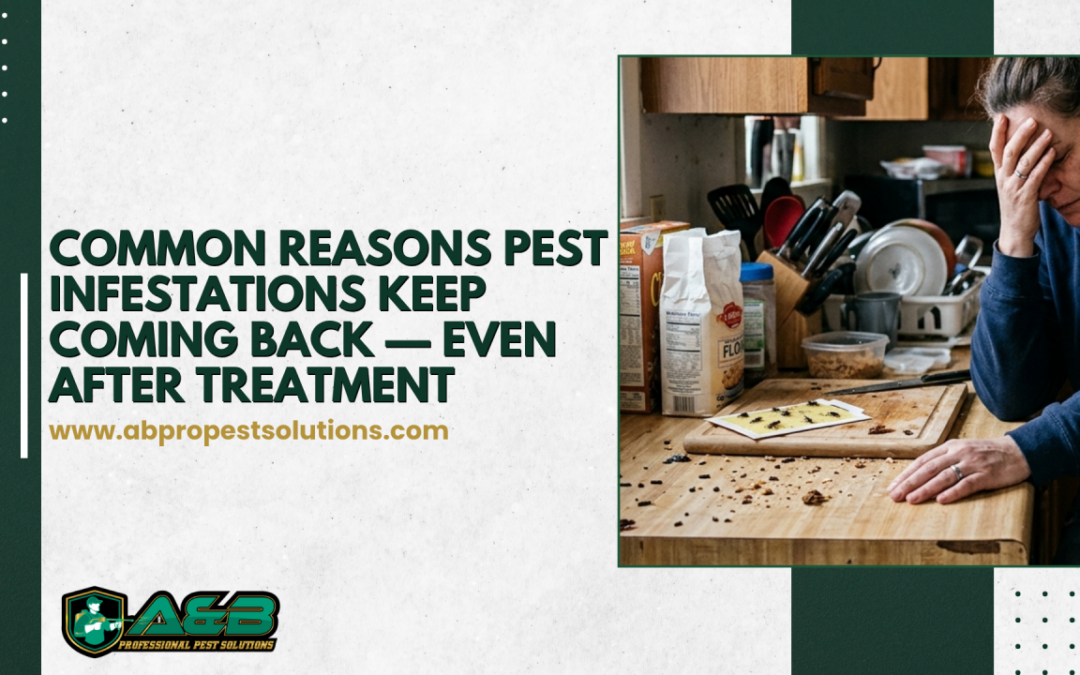
You scheduled a pest control treatment, saw fewer pests for a while, and assumed the problem was solved. Then suddenly, the scratching sounds return, cockroaches reappear in the pantry, termites show up near wooden fixtures again, or flies start gathering around drains.
Recurring infestations are one of the most frustrating problems property owners face—and in many cases, the issue is not the treatment itself, but the underlying conditions that continue to attract pests back into the property.
Pests survive because they find three things: food, water, and shelter. If even one of these remains consistently available, infestations can return repeatedly despite multiple treatments. Understanding the root causes behind recurring infestations is the key to achieving long-term pest protection.
1. Hidden Entry Points Were Never Sealed
One of the biggest reasons infestations return is because pests still have easy access into the building. Small cracks, wall gaps, damaged vents, open drainage systems, and unsealed utility lines act as entry highways for rodents, cockroaches, ants, and other pests.
Rodents can squeeze through surprisingly small openings, while cockroaches can enter through tiny crevices around pipes and drainage areas. In commercial facilities, loading docks, delivery areas, and improperly sealed doors are common access points.
Without proper exclusion work, pests may continue re-entering the property no matter how often treatments are applied.
Common Entry Points Include:
- Gaps beneath doors
- Cracks in walls and flooring
- Open drainage lines
- Unsealed pipe penetrations
- Damaged window screens
- Roof and ceiling gaps
- Utility cable openings
Professional pest management should always include inspection and sealing recommendations—not just chemical application.
2. Moisture Problems Continue to Attract Pests
Moisture is one of the strongest pest attractants. Damp environments encourage termites, cockroaches, mosquitoes, ants, flies, and rodents to stay and reproduce.
Leaking pipes, clogged drains, roof leaks, standing water, and excessive humidity create ideal breeding conditions. In warehouses and commercial kitchens, condensation and poor drainage are often overlooked sources of infestation.
Termites are especially attracted to moisture-damaged wood, while cockroaches thrive in damp kitchens, grease traps, and sink areas.
High-Risk Moisture Areas:
- Under sinks
- Floor drains
- Storage rooms
- Air-conditioning drip zones
- Restrooms
- Grease trap areas
- Roof leak sections
Addressing moisture issues is critical for long-term pest prevention.
3. Poor Sanitation Encourages Pest Activity
Even the most effective pest treatment can fail if sanitation problems persist. Food crumbs, grease buildup, overflowing garbage, and improper storage practices provide continuous food sources for pests.
Cockroaches, rodents, ants, and flies are highly adaptable. Once they discover a reliable food source, they are likely to return repeatedly.
In commercial facilities, recurring infestations often occur because operational practices unintentionally support pest survival.
Common Sanitation Issues:
- Food debris under equipment
- Dirty grease traps
- Uncovered trash bins
- Unclean storage areas
- Improper food storage
- Standing dirty dishes overnight
- Cluttered stock rooms
Pest control works best when paired with strict sanitation management.
4. The Entire Infestation Was Never Eliminated
Some infestations appear smaller than they really are. What property owners see is often only a small portion of the actual pest population hidden behind walls, ceilings, drains, or underground colonies.
This is especially true for:
- Termites
- German cockroaches
- Rodents
- Bed bugs
For example, termites may continue damaging structures underground even when visible signs temporarily disappear. Cockroach eggs can survive incomplete treatments and hatch weeks later.
Professional inspections using advanced tools like termite detection systems and monitoring devices help identify hidden activity that standard visual inspections may miss.
5. Lack of Routine Monitoring and Maintenance
Many infestations return simply because treatments stop too early. Pest control is not a one-time event—it is an ongoing preventive process.
Properties without routine inspections are more vulnerable to:
- Reinfestation
- Seasonal pest surges
- Hidden structural infestations
- Sudden population explosions
This is especially important in tropical environments like the Philippines, where heat, humidity, and rainfall create ideal conditions for year-round pest activity.
Routine pest monitoring allows professionals to detect early warning signs before infestations become severe and costly.
6. DIY Treatments Only Address Surface Activity
Over-the-counter sprays may kill visible pests temporarily, but they rarely eliminate the root cause of the infestation.
DIY solutions often:
- Miss hidden nests and colonies
- Fail to reach breeding areas
- Push pests deeper into walls
- Cause pests to relocate temporarily
- Create resistance due to improper application
For termites and rodents especially, incomplete treatments can allow infestations to grow unnoticed over time.
Professional pest management focuses on identification, inspection, treatment strategy, monitoring, and prevention—not just immediate elimination.
7. Seasonal Changes Increase Pest Pressure
Changes in weather heavily influence pest activity. During rainy seasons, rodents and cockroaches often move indoors searching for shelter and food. Warmer temperatures can also increase breeding cycles for insects and mosquitoes.
Businesses and homeowners frequently mistake seasonal pest surges as “new” infestations when the pests were already present in hidden areas.
Preventive pest control before seasonal transitions helps reduce sudden infestation spikes.
Why Long-Term Prevention Matters
Recurring infestations can lead to:
- Structural damage
- Product contamination
- Health risks
- Customer complaints
- Failed inspections
- Operational disruptions
- Increased repair costs
The most effective pest management programs focus on long-term prevention through:
- Routine inspections
- Monitoring systems
- Sanitation improvements
- Structural exclusion
- Moisture control
- Targeted treatments
- Preventive maintenance schedules
Early detection and proactive pest management always cost less than dealing with severe infestations later.
Protect Your Property Before Infestations Return
At A&B Professional Pest Solutions, we provide smart, safe, and science-backed pest management solutions designed for long-term protection. From termite inspections using advanced monitoring technology to integrated pest management programs for homes and businesses, our team helps identify the root causes of recurring infestations—not just the visible symptoms.
Whether you manage a residential property, warehouse, office, restaurant, school, or industrial facility, proactive pest prevention is the key to protecting your property, reputation, and operations.
To know more about A&B’s services, please visit the A&B’s website (www.abpestsolutions.com.ph) or Facebook Page (https://www.facebook.com/ABPestSolutions/) to know more about their services. A&B also disinfects workplaces or houses to kill COVID-19 Virus.
You may also contact: +63 905 496 4550 and +63 951 062 4830
A&B Professional Pest Solutions Corporation is located at the Ground Floor of Monterey Building at Genesis St., Centro de San Lorenzo, Santa Rosa, 4026 Laguna, Philippines