
Why Understanding the Difference Can Protect Your Property and Prevent Costly Problems
Many property owners believe that seeing a pest once in a while is normal and harmless. While occasional encounters can happen in any environment, professional pest management clearly distinguishes between occasional pest activity and a true infestation.
Failing to recognize this difference is one of the primary reasons minor pest concerns escalate into serious health hazards, structural damage, regulatory violations, and expensive long-term problems.
Pests rarely appear without reason. Every sighting provides information about environmental conditions, structural vulnerabilities, or sanitation gaps that may allow pests to survive indoors. Understanding what these sightings mean allows property owners and facility managers to act early — when solutions are simpler, safer, and more cost-effective.
What Is Occasional Pest Activity?
Occasional pest activity refers to isolated or accidental pest sightings where no established population exists within the property. These pests are typically temporary intruders that enter while searching for food, moisture, or shelter but have not successfully settled or begun reproducing indoors.
Buildings are not completely sealed ecosystems. Small openings, human activity, and environmental changes constantly create opportunities for pests to enter briefly.
Why Occasional Activity Happens
Common contributing factors include:
- Open doors, loading bays, or frequently used entrances
- Tiny cracks in foundations, walls, or flooring
- Gaps around plumbing lines, drains, or electrical conduits
- Improperly sealed windows or ventilation openings
- Food residue, spills, or uncovered waste containers
- Outdoor lighting attracting insects at night
- Seasonal weather transitions forcing pests indoors
- Landscaping or vegetation touching building structures
- Nearby construction disturbing pest habitats
In these situations, pests are exploring, not colonizing.
Sightings are typically:
- Infrequent
- Random in location
- Short-lived
- Reduced after cleaning or minor maintenance adjustments
Although occasional activity may resolve quickly, it should never be ignored. It indicates that pests have successfully identified an access point that could later support infestation if conditions improve.
What Is a Pest Infestation?
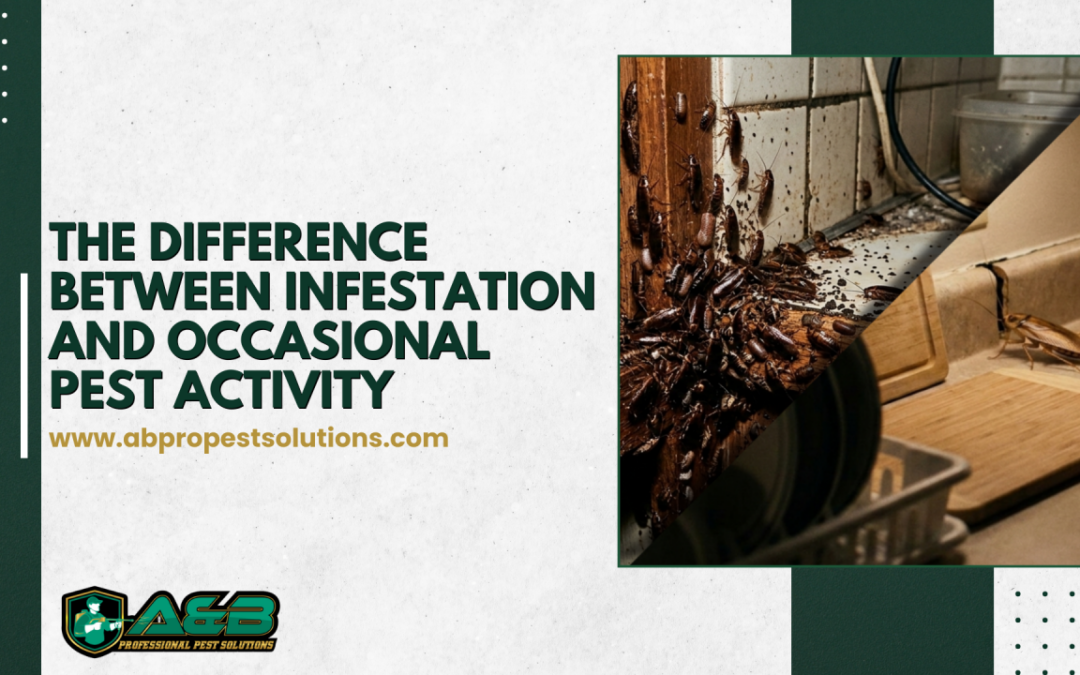
A pest infestation occurs when pests establish a stable breeding population inside or around a structure. At this stage, pests are no longer accidental visitors — they have located consistent resources and adapted to the environment.
Infestations develop gradually. Most begin with unnoticed activity in hidden areas such as wall voids, ceilings, storage spaces, drains, or underground soil.
Conditions That Allow Infestations to Develop
Pests thrive when four essential survival factors are present:
- Reliable food sources
- Accessible moisture or water
- Safe shelter or harborage areas
- Limited disturbance or detection
Once these conditions exist, populations expand rapidly.
Clear Indicators of Infestation
- Repeated sightings in the same areas
- Multiple pests visible during daytime
- Droppings, egg capsules, nesting materials, or shed skins
- Persistent musty or oily odors
- Damage to packaging, insulation, furniture, or wiring
- Sounds within walls or ceilings
- Continued activity despite cleaning or DIY treatments
By the time pests are commonly seen, colonies are often already well established.
Rapid Reproduction Makes Infestations Dangerous
Many pest species multiply faster than property owners expect:
- Cockroaches can produce hundreds of offspring within months.
- Rodents reproduce year-round indoors under stable conditions.
- Termites operate silently, causing structural damage long before detection.
- Stored-product pests contaminate inventory continuously once established.
This exponential growth is why infestations escalate quickly when early warning signs are overlooked.
Why the Difference Matters
Understanding whether you are dealing with occasional activity or infestation directly impacts risk level, response strategy, and financial outcome.
Health and Safety Risks
Pests contaminate surfaces, equipment, and food preparation areas with bacteria, pathogens, and allergens. Cockroaches and rodents are associated with disease transmission and respiratory triggers, especially in sensitive environments such as homes, restaurants, and healthcare facilities.
Structural and Asset Damage
- Rodents chew electrical wiring, increasing fire risks.
- Termites weaken wooden structures and support systems.
- Insects damage stored goods and packaging materials.
- Moisture-loving pests accelerate material deterioration.
Much of this damage occurs behind walls, under floors, or in concealed spaces before becoming visible.
Business and Compliance Risks
Commercial facilities face elevated consequences:
- Failed health inspections
- Product contamination
- Customer complaints or online reputation damage
- Operational disruptions
- Regulatory penalties
Even a single pest sighting in customer-facing environments can affect public perception.
Financial Impact
Early intervention during occasional activity typically requires minimal corrective action. Infestations, however, may involve:
- Intensive treatment programs
- Structural repairs
- Product loss
- Operational downtime
- Long-term monitoring costs
Preventive action is always more economical than reactive control.
Early Warning Signs You Should Never Ignore
Pests rarely appear suddenly; they leave subtle evidence first. Warning signs include:
- Small droppings or smear marks along walls
- Scratching or movement sounds at night
- Dead insects near windows or light fixtures
- Grease trails or rub marks from rodents
- Unexplained odors in storage or enclosed areas
- Gnaw marks on materials or packaging
- Increased insect activity near drains
These indicators often signal hidden populations developing out of sight.
Prevention Versus Professional Treatment
Occasional pest activity can often be minimized through proactive environmental management:
- Maintaining strict sanitation practices
- Proper waste storage and disposal
- Sealing structural gaps and entry points
- Managing moisture and drainage issues
- Reducing clutter and storage harborage areas
- Regular facility inspections
However, repeated sightings or evidence of breeding indicate that professional pest management is necessary.
Modern pest control focuses on Integrated Pest Management (IPM) — a strategic approach combining inspection, monitoring, exclusion, sanitation improvement, and targeted treatment. The goal is not only elimination but long-term prevention by addressing root causes.
Final Thoughts
Not every pest sighting means an infestation — but every sighting carries meaning.
Occasional pest activity is a warning signal.
An infestation is often the consequence of delayed response.
Recognizing the difference allows property owners and businesses to act proactively, protect occupants, preserve property value, and maintain safe environments before problems escalate beyond simple control.
Protect Your Property Before Pests Take Control
If you are uncertain whether pest sightings indicate temporary activity or a developing infestation, professional evaluation provides clarity and peace of mind.
A&B Professional Pest Solutions delivers expert inspections, preventive pest management programs, and customized treatment strategies designed to detect pest risks early, eliminate active problems, and protect residential and commercial properties from long-term damage.
Schedule a professional inspection today and take the first step toward a safer, healthier, pest-free environment.
To know more about A&B’s services, please visit the A&B’s website (www.abpestsolutions.com.ph) or Facebook Page (https://www.facebook.com/ABPestSolutions/) to know more about their services. A&B also disinfects workplaces or houses to kill COVID-19 Virus.
You may also contact: +63 905 496 4550 and +63 951 062 4830
A&B Professional Pest Solutions Corporation is located at the Ground Floor of Monterey Building at Genesis St., Centro de San Lorenzo, Santa Rosa, 4026 Laguna, Philippines